
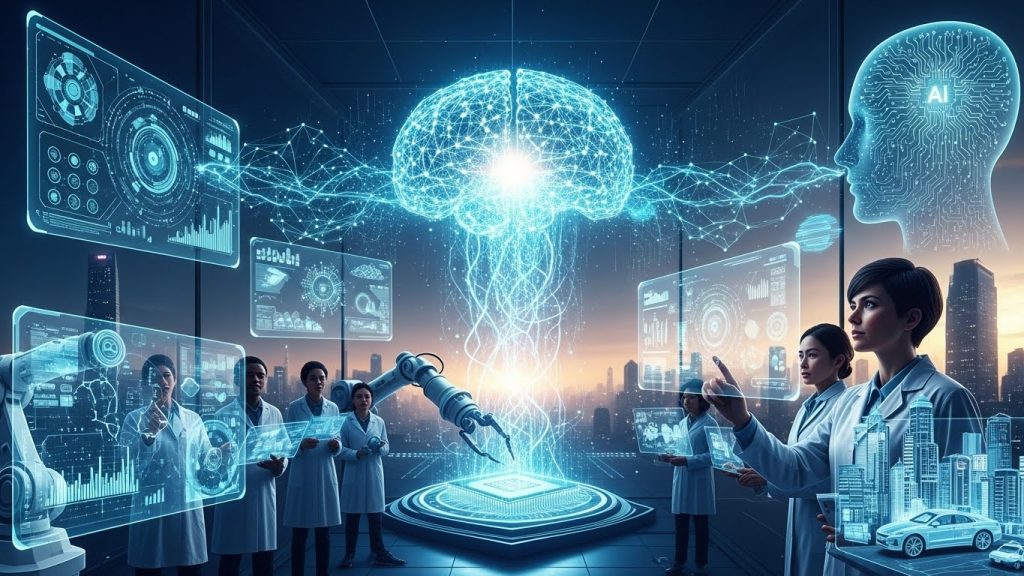
Harnessing the Power of AI: The Future of Technology and Innovation
In the rapidly evolving landscape of technology, Artificial Intelligence (AI) stands as a beacon of transformation, driving innovation across various sectors. From healthcare to finance, AI is reshaping the way we interact with the world, promising a future that is both exciting and challenging. In this post, we explore the myriad ways AI is harnessing its power to shape the future of technology and innovation, delving into its potential, applications, ethical considerations, and the road ahead.
The Rise of Artificial Intelligence
Artificial Intelligence has transitioned from a futuristic concept to an integral part of our daily lives. This rise can be attributed to advances in machine learning, data analytics, and computational power. AI systems, once limited to performing specific tasks, are now capable of understanding complex data patterns, making autonomous decisions, and even engaging in natural language conversations.
One of the primary drivers of AI’s growth is the explosion of data. With the advent of the digital age, vast amounts of data are generated every second. AI technologies, particularly deep learning, have the capability to analyze and learn from these data sets, providing insights that were previously unimaginable. This ability to learn and adapt is what makes AI a powerful tool for innovation.
Applications Across Industries
The applications of AI span across various industries, each harnessing its power to enhance efficiency, accuracy, and personalization.
Healthcare

In healthcare, AI is revolutionizing patient care and medical research. AI algorithms are used to analyze medical images, predict patient outcomes, and even assist in surgeries. Technologies such as machine learning are helping doctors make more accurate diagnoses and develop personalized treatment plans, ultimately leading to better patient outcomes.
Finance
AI is also making significant strides in the financial sector. From fraud detection to algorithmic trading, AI systems are enhancing the security and efficiency of financial operations. AI-driven analytics provide banks and financial institutions with insights that assist in risk management and customer service, ensuring a seamless and secure financial ecosystem.
Retail
In retail, AI is transforming the shopping experience through personalization and automation. Retailers are using AI to analyze consumer behavior, optimize inventory management, and enhance customer interaction through chatbots and recommendation systems. This not only improves customer satisfaction but also boosts sales and operational efficiency.
Ethical Considerations and Challenges
While the potential of AI is vast, it is not without its challenges. Ethical considerations are at the forefront of AI’s development and implementation. Issues such as data privacy, bias in AI algorithms, and the impact of automation on employment are critical concerns that need to be addressed.
Ensuring that AI systems are transparent and unbiased is crucial for maintaining public trust. This involves implementing rigorous testing and validation processes, as well as fostering an inclusive approach to AI development. Additionally, regulations and guidelines, such as those proposed by the European Union, are essential for creating a safe and fair AI ecosystem.
The Role of AI in Driving Innovation
AI’s ability to drive innovation lies in its potential to augment human capabilities and unlock new possibilities. By automating mundane tasks, AI allows humans to focus on creative and strategic initiatives. This synergy between human intelligence and artificial intelligence fosters an environment where innovation can thrive.
Moreover, AI is playing a pivotal role in scientific research and discovery. From accelerating drug development to exploring space, AI technologies are enabling breakthroughs that were once beyond reach. The integration of AI in research processes is not only making them more efficient but also more accurate, paving the way for new scientific paradigms.
The Future of AI: Opportunities and Possibilities
Looking ahead, the future of AI is filled with opportunities and possibilities. As AI technologies continue to mature, their integration into various aspects of life is expected to deepen. The emergence of AI-driven innovations such as autonomous vehicles, smart cities, and advanced robotics points to a future where AI plays a central role in shaping our environment and society.
However, realizing this future requires a concerted effort from stakeholders, including governments, businesses, and academia. Collaboration is key to ensuring that AI technologies are developed responsibly and equitably. By fostering a culture of innovation and ethical responsibility, we can harness the power of AI to create a future that is prosperous and sustainable for all.
Takeaways
Artificial Intelligence is at the forefront of technological innovation, offering transformative potential across various sectors. Its ability to learn, adapt, and enhance human capabilities makes it a powerful tool for driving progress. However, as we embrace the opportunities AI presents, it is imperative to address the ethical and societal challenges it poses. By fostering a responsible and inclusive approach to AI development, we can ensure that its power is harnessed for the greater good, paving the way for a future where technology and innovation go hand in hand to improve our world.
Bridging the Digital Divide with AI
One of the significant opportunities AI presents is its potential to bridge the digital divide, offering transformative benefits to communities that have traditionally been underserved by technology. By providing access to information and resources, AI can empower individuals and communities to participate more fully in the global economy.
AI-driven platforms are being developed to offer educational resources tailored to diverse learning needs and languages, enabling students in remote areas to access quality education. Additionally, healthcare applications powered by AI can provide remote diagnostics and telemedicine services, bringing healthcare to regions lacking traditional medical infrastructure.
Furthermore, AI can play a crucial role in agriculture by offering predictive analytics to optimize crop yields and resource management, which is particularly beneficial to farmers in developing countries. These applications not only enhance productivity but also contribute to sustainable development goals by addressing issues of poverty and inequality.
AI and the Future Workforce
The integration of AI into the workforce is both a source of excitement and concern. While AI has the potential to automate many routine tasks, leading to increased efficiency and productivity, it also poses challenges regarding job displacement and the need for workforce reskilling.
To address these challenges, there is a growing emphasis on developing new skills and competencies that align with the changing job landscape. Educational institutions and governments are focusing on STEM (Science, Technology, Engineering, and Mathematics) education, as well as fostering skills in critical thinking, creativity, and emotional intelligence, areas where human capabilities complement AI technologies.
Additionally, companies are increasingly investing in workforce training programs to ensure employees are equipped to work alongside AI systems. By embracing a culture of continuous learning and adaptation, the workforce of the future can thrive in an AI-enhanced environment.
AI Ethics and Governance
As AI technologies become more pervasive, the need for robust ethical frameworks and governance structures becomes increasingly critical. Ensuring that AI systems are developed and deployed in ways that respect human rights and promote fairness is paramount.
Organizations and policymakers are actively working on establishing ethical guidelines and standards for AI development. Initiatives such as the World Economic Forum’s Global AI Council aim to address these challenges by promoting transparency, accountability, and responsible AI innovation.
Furthermore, interdisciplinary collaboration is essential to address the complex ethical issues surrounding AI. By bringing together experts from fields such as law, ethics, technology, and sociology, we can develop comprehensive strategies to ensure that AI serves the public good.
AI in Environmental Sustainability
Artificial Intelligence is also playing a pivotal role in addressing environmental challenges. AI technologies are being leveraged to monitor and mitigate the effects of climate change, optimize resource use, and protect biodiversity.
For example, AI-powered systems can analyze satellite imagery to track deforestation and land use changes, providing valuable data for conservation efforts. Additionally, AI-driven predictive models are being used to optimize energy consumption and reduce waste, contributing to more sustainable industrial practices.
Moreover, AI is facilitating the development of smart cities, where intelligent systems manage everything from traffic flows to waste management, enhancing urban sustainability. These applications demonstrate AI’s potential to foster environmental stewardship and create a more sustainable future.
Final Thoughts
As we stand on the brink of a new era defined by artificial intelligence, the potential for positive change is immense. AI offers transformative possibilities across every facet of society, from enhancing productivity and fostering innovation to addressing global challenges such as poverty, inequality, and climate change.
However, realizing this potential requires thoughtful consideration of the ethical and societal implications of AI technologies. By fostering a collaborative, inclusive, and responsible approach to AI development, we can ensure that the benefits are shared broadly, paving the way for a future where technology and innovation contribute to a just and sustainable world.
In conclusion, harnessing the power of AI is not just about technological advancement but about enhancing human potential and creating a better future for all. As we continue to explore and innovate, let us remain committed to the principles of fairness, transparency, and responsibility, ensuring that AI serves as a force for good in the world.
About the Author