
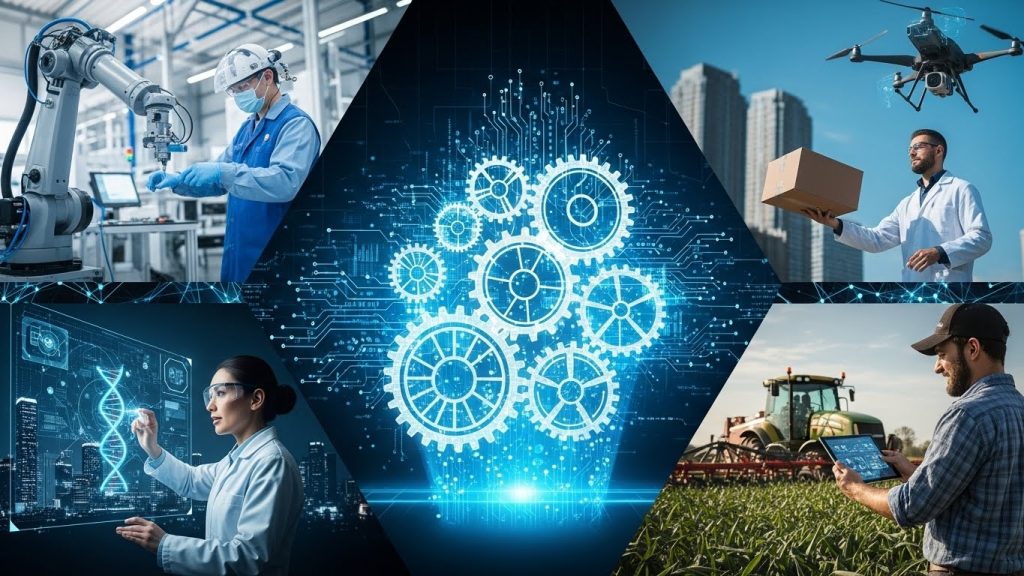
Emerging Technological Innovations that are Reshaping Industries
In today’s rapidly evolving world, technological innovations are not just enhancing our daily lives but are also fundamentally reshaping entire industries. From artificial intelligence revolutionizing customer service to blockchain transforming financial transactions, the scope and scale of these innovations are unprecedented. This article delves into the most significant technological breakthroughs and explores how they are redefining industries across the globe.
Artificial Intelligence and Machine Learning
Artificial Intelligence (AI) and Machine Learning (ML) are at the forefront of technological innovation, driving significant changes in various sectors. AI’s ability to process vast amounts of data quickly and accurately has enabled businesses to offer personalized experiences, streamline operations, and improve decision-making processes.
In the healthcare industry, AI is being used to develop predictive models that can diagnose diseases earlier and with greater accuracy than ever before. For instance, AI algorithms can analyze medical images to identify anomalies that might be missed by the human eye, thereby facilitating early intervention and treatment.
Similarly, in the financial sector, machine learning algorithms are used to detect fraudulent activities by analyzing patterns and anomalies in transaction data. This proactive approach not only helps in preventing fraud but also enhances customer trust and satisfaction.
The Internet of Things (IoT)
The Internet of Things (IoT) refers to the network of interconnected devices that communicate and exchange data with each other. This technology is having a profound impact on industries such as manufacturing, agriculture, and smart home solutions.

In manufacturing, IoT devices are used to monitor equipment and machinery in real-time. This constant stream of data allows for predictive maintenance, reducing downtime and increasing efficiency. Companies can thus save significant costs and optimize their operations by addressing issues before they lead to equipment failure.
In agriculture, IoT sensors are used to monitor soil conditions, weather patterns, and crop health. This data-driven approach enables farmers to make informed decisions, optimize resource usage, and increase crop yields, contributing to sustainable agricultural practices.
Blockchain Technology
Blockchain technology, best known as the backbone of cryptocurrencies like Bitcoin, is increasingly being adopted across various industries due to its ability to provide secure, transparent, and tamper-proof transactions.
In the financial industry, blockchain is being used to streamline cross-border payments, reducing the time and cost associated with traditional banking methods. By eliminating intermediaries, blockchain enables faster and more cost-effective transactions.
The supply chain sector is also witnessing a transformation with blockchain technology. By providing a transparent and immutable record of transactions, blockchain enhances traceability and accountability, addressing issues related to counterfeit goods and ensuring product authenticity.
5G Technology
5G technology is set to revolutionize communication networks with its high-speed, low-latency capabilities. This next-generation wireless technology is a game-changer for industries such as telecommunications, transportation, and entertainment.
Telecommunications companies are leveraging 5G to offer faster and more reliable internet services, enabling seamless connectivity for users. This advancement is particularly crucial for the development of smart cities, where interconnected devices rely on stable and high-speed internet connections.
In the transportation industry, 5G is facilitating the development of autonomous vehicles by providing the necessary infrastructure for real-time data exchange between vehicles and their surroundings. This technology enhances safety, reduces traffic congestion, and paves the way for more efficient transportation systems.
Augmented Reality (AR) and Virtual Reality (VR)
Augmented Reality (AR) and Virtual Reality (VR) are transforming how we interact with the digital world. These immersive technologies are being applied in industries such as retail, education, and healthcare to enhance user experiences and provide innovative solutions.
In the retail sector, AR is being used to create interactive shopping experiences. Customers can use AR apps to visualize how products will look in their homes or try on virtual clothing, leading to more informed purchasing decisions and increased customer satisfaction.
In education, VR offers immersive learning experiences by allowing students to explore virtual environments and interact with educational content in a hands-on manner. This technology enhances engagement and retention, making learning more effective and enjoyable.
In healthcare, VR is used for therapeutic purposes, providing patients with immersive environments to help manage pain, anxiety, and stress. Additionally, VR is used in medical training, offering students realistic simulations to practice surgical procedures in a risk-free environment.
Takeaways
The rapid pace of technological innovation is reshaping industries in ways we could have only imagined a few decades ago. From AI and IoT to blockchain and 5G, these advancements are not just enhancing efficiency and productivity but also opening up new possibilities and opportunities for businesses and consumers alike.
As we continue to embrace these emerging technologies, it is crucial for industries to adapt and evolve in order to stay competitive in an increasingly digital world. By understanding and leveraging these innovations, businesses can not only improve their operations but also create value and drive growth in the years to come.
For those interested in exploring more about how these technologies are impacting industries, numerous resources and studies are available. For example, the McKinsey Global Institute provides in-depth insights and analyses on the potential of digital technologies across various sectors.
In conclusion, the future is bright with possibilities as these technological innovations continue to evolve and reshape industries, paving the way for a more connected, efficient, and sustainable world.
Quantum Computing
Quantum computing is an emerging technology that promises to revolutionize industries by solving complex problems that are currently beyond the reach of classical computers. Leveraging the principles of quantum mechanics, quantum computers have the potential to perform calculations at unprecedented speeds, making them invaluable for industries that require immense computational power.
In the field of cryptography, quantum computing poses both challenges and opportunities. While it threatens to break current encryption methods, it also paves the way for developing new, more secure encryption techniques. Organizations are actively researching quantum-safe cryptography to safeguard data in a post-quantum world.
The pharmaceutical industry stands to benefit immensely from quantum computing as well. Drug discovery, which involves complex molecular modeling and simulations, can be significantly accelerated, reducing the time and cost associated with bringing new drugs to market. This capability can lead to breakthroughs in treating diseases and improving global health outcomes.
Robotics and Automation
Robotics and automation are transforming industries by enhancing productivity, reducing costs, and improving safety. These technologies are being deployed in various sectors, including manufacturing, logistics, and healthcare.
In manufacturing, robots are used for tasks such as assembly, welding, and painting, where precision and consistency are crucial. Automation helps factories increase production rates while maintaining high-quality standards. Additionally, collaborative robots, or cobots, are designed to work alongside humans, enhancing workplace safety and efficiency.
In logistics, automation is streamlining supply chain operations by optimizing inventory management, order fulfillment, and transportation. Autonomous delivery drones and vehicles are being tested to ensure faster and more efficient delivery of goods, particularly in remote areas.
Healthcare is also seeing the adoption of robotics for surgical procedures, where precision is paramount. Robotic-assisted surgeries enable minimally invasive procedures, resulting in quicker recovery times and better patient outcomes.
Biotechnology and Genetic Engineering
Biotechnology and genetic engineering are pushing the boundaries of what is possible in medicine and agriculture. By manipulating genetic material, scientists are developing innovative solutions to some of the world’s most pressing challenges.
In medicine, biotechnology is being used to develop targeted therapies for diseases such as cancer. By understanding the genetic makeup of tumors, researchers can create personalized treatment plans that improve efficacy and reduce side effects. Gene editing technologies like CRISPR offer the potential to correct genetic disorders at the source, opening new frontiers in disease prevention and treatment.
Agriculture is also benefiting from advances in biotechnology. Genetically modified crops are engineered to be more resistant to pests and diseases, reducing the need for chemical pesticides and enhancing food security. Additionally, genetic advancements are helping develop crops that can withstand extreme weather conditions, ensuring stable food supplies in the face of climate change.
Nanotechnology
Nanotechnology, the manipulation of matter at the atomic and molecular scale, is revolutionizing industries by creating materials and devices with enhanced properties. This cutting-edge technology is being applied in sectors such as electronics, medicine, and energy.
In electronics, nanotechnology is enabling the development of smaller, faster, and more energy-efficient devices. Nanoscale transistors are at the heart of modern computer chips, driving advancements in computing power and miniaturization.
In medicine, nanotechnology is being used to create targeted drug delivery systems. By encapsulating drugs in nanoparticles, it is possible to deliver them directly to diseased cells, minimizing side effects and improving treatment outcomes. Researchers are also exploring the use of nanomaterials for diagnostic purposes, enabling the early detection of diseases such as cancer.
In the energy sector, nanotechnology is contributing to the development of more efficient solar panels and batteries. By enhancing the materials used in these technologies, nanotechnology is helping to unlock new levels of energy efficiency and sustainability.
The Future of Technological Innovation
As we look to the future, the pace of technological innovation shows no signs of slowing down. Emerging technologies are poised to continue reshaping industries, offering new opportunities for growth and development. To thrive in this rapidly changing landscape, businesses and individuals must remain agile and open to embracing new technologies.
Continuous learning and adaptation will be key to harnessing the full potential of these innovations. By investing in research, development, and creating a culture of adaptability, organizations can position themselves at the forefront of technological advancement, driving innovation, and maintaining competitive advantages.
Ultimately, the successful integration of these technologies will depend on collaboration between industry leaders, governments, and educational institutions to address the ethical, legal, and social implications of these advancements. By working together, we can ensure that technological innovation continues to improve lives and create a brighter future for all.
About the Author