The Impact of Blockchain Technology on Today’s Digital Landscape Blockchain technology, once the underlying framework for cryptocurrency, has rapidly evolved to become a transformative force.
techbrazilnews.comBrazil technology news and analysis.
“The Impact of Blockchain Technology on Today’s Digital Landscape”
Updated: April 9, 2026
The Impact of Blockchain Technology on Today’s Digital Landscape
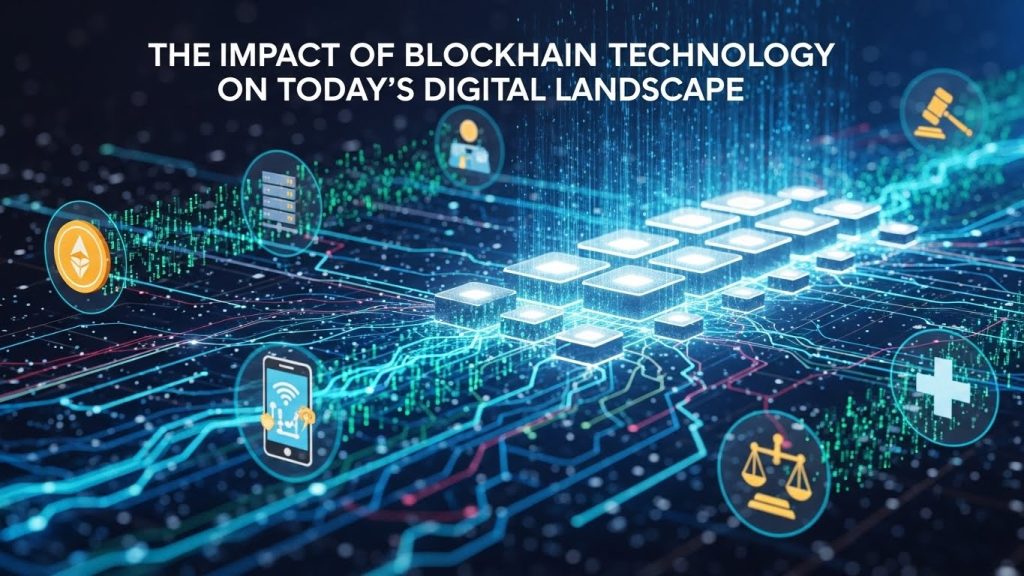
Blockchain technology, once the underlying framework for cryptocurrency, has rapidly evolved to become a transformative force across various sectors. Its potential to revolutionize industries is becoming increasingly apparent as businesses and governments alike explore its capabilities. In this comprehensive analysis, we explore the far-reaching impact of blockchain technology on the digital landscape, highlighting key areas of transformation and future potential.
The Fundamentals of Blockchain Technology
At its core, blockchain is a decentralized ledger that records transactions across multiple computers so that the record cannot be altered retroactively without the alteration of all subsequent blocks and the consensus of the network. This ensures the transparency and security of data, making it an attractive option for various applications beyond cryptocurrencies.
Blockchain technology comprises several key components, including immutability, decentralization, and transparency. These features not only enhance security but also facilitate trust among participants, potentially reducing the need for intermediaries in transactions.
Revolutionizing Financial Services
The financial sector has witnessed significant disruption due to blockchain technology. By enabling faster, cheaper, and more secure transactions, blockchain has paved the way for innovations such as decentralized finance (DeFi). DeFi platforms leverage blockchain to offer financial services without traditional intermediaries, thus democratizing access to financial products.
Additionally, blockchain technology has enhanced cross-border payment systems. Traditional methods are often slow and costly due to multiple intermediaries and currency conversion fees. In contrast, blockchain allows for near-instantaneous transactions with minimal fees, significantly benefiting individuals and businesses engaged in international trade.
Transforming Supply Chain Management

Supply chain management is another area where blockchain is making significant inroads. By providing a transparent and immutable record of each transaction, blockchain enhances the traceability of goods throughout the supply chain. This not only ensures product authenticity but also helps in identifying the source of disruptions quickly and efficiently.
For instance, the food industry has begun utilizing blockchain to trace the journey of food products from farm to table, thereby ensuring food safety and quality. IBM’s Food Trust is an example of a platform that uses blockchain to enhance transparency and efficiency in the food supply chain.
Enhancing Data Security and Privacy
In an era where data breaches and privacy concerns are prevalent, blockchain technology offers a promising solution. Its decentralized nature means that data is stored across a network of computers, making it nearly impossible for hackers to alter data without being detected.
Moreover, blockchain can provide users with greater control over their personal information. By leveraging cryptographic techniques, blockchain ensures that data is only accessible to authorized parties, thus enhancing privacy and security.
Impact on Healthcare Industry
The healthcare industry stands to benefit greatly from the adoption of blockchain technology. By creating a unified and secure platform for storing medical records, blockchain can improve the accessibility and accuracy of patient data. This not only enhances care coordination but also reduces administrative costs.
Furthermore, blockchain can facilitate clinical trials by ensuring the integrity of data and providing a transparent process for tracking the consent of participants. Companies like Accenture are exploring blockchain solutions to address these challenges in healthcare.
Future Prospects and Challenges
Despite its transformative potential, blockchain technology faces several challenges that must be addressed for widespread adoption. Scalability remains a significant issue, as the current infrastructure struggles to handle a large volume of transactions efficiently. Advances in technology, such as the development of layer 2 solutions, are crucial in overcoming these limitations.
Regulatory uncertainty is another barrier to adoption. As blockchain technology continues to evolve, governments and regulatory bodies must develop frameworks that protect consumers while enabling innovation. Collaborative efforts between the private sector and regulators will be essential in achieving this balance.
Takeaways
Blockchain technology is poised to redefine the digital landscape across various sectors, offering unprecedented levels of security, transparency, and efficiency. As the technology matures, its impact will only grow, driving innovation and transforming industries. To fully realize the potential of blockchain, stakeholders must address current challenges and foster an environment conducive to its development. As we move forward, the integration of blockchain into mainstream applications will undoubtedly shape the future of the digital world, unlocking new opportunities and paving the way for a more interconnected and trustworthy global economy.
Blockchain and the Internet of Things (IoT)
The convergence of blockchain technology with the Internet of Things (IoT) presents numerous possibilities for enhancing connectivity and security. As IoT devices proliferate, the need for a secure and efficient method of data management becomes increasingly important. Blockchain provides a decentralized approach to handling vast amounts of data generated by IoT devices, ensuring data integrity and authenticity.
One practical application is in smart cities, where blockchain can manage data from various IoT devices such as sensors, cameras, and meters. This integration can lead to improved urban planning, enhanced security, and better resource management. Moreover, blockchain can facilitate automated transactions between IoT devices, enabling a seamless and secure exchange of information.
Blockchain in Intellectual Property and Digital Rights Management
In the realm of intellectual property and digital rights management, blockchain technology offers a robust solution for protecting creators’ works. By providing a secure and transparent ledger, blockchain enables artists, musicians, and writers to register their creations, ensuring proof of ownership and origin.
This capability is particularly relevant in an age where digital content can be easily copied and distributed without the creator’s consent. Platforms utilizing blockchain can automatically track and enforce licensing agreements, ensuring that creators receive due compensation for their work and that their intellectual property is protected.
Educational Applications of Blockchain
Blockchain’s potential extends to the education sector, where it can revolutionize the way academic credentials are managed and verified. Traditionally, the process of verifying diplomas and certificates is time-consuming and prone to fraud. Blockchain can streamline this process by creating an immutable record of academic achievements that can be easily accessed and verified by employers and educational institutions.
Furthermore, blockchain can support lifelong learning by allowing individuals to compile a comprehensive and verifiable record of their educational and professional achievements. This approach not only empowers learners but also assists employers in making informed hiring decisions based on reliable data.
Environmental Implications of Blockchain
While blockchain technology offers numerous benefits, it is not without environmental concerns, particularly regarding energy consumption. The process of mining cryptocurrencies, which relies on blockchain technology, is energy-intensive and has raised questions about its sustainability.
However, the industry is actively seeking solutions to mitigate these concerns. Innovations such as proof-of-stake (PoS) consensus mechanisms, which require significantly less energy than traditional proof-of-work (PoW) systems, are being developed to address the environmental impact of blockchain. Additionally, blockchain can play a role in environmental conservation by enabling transparent tracking of carbon credits and promoting sustainable practices.
Blockchain for Social Impact
Beyond its commercial applications, blockchain has the potential to drive positive social change. In regions where access to financial services is limited, blockchain-based solutions can provide unbanked populations with access to financial products, enabling economic empowerment and reducing poverty.
Moreover, blockchain can enhance transparency in charitable organizations by providing a clear record of donations and their use. This level of transparency can increase donor trust and encourage more significant contributions to social causes, thereby amplifying the impact of charitable initiatives.
Conclusion and Future Outlook
The transformative power of blockchain technology across various domains is undeniable. As we continue to explore its potential, the focus must be on addressing the challenges that impede its widespread adoption. By fostering innovation, collaboration, and responsible regulation, blockchain can unlock new opportunities and redefine the digital landscape.
Looking ahead, the integration of blockchain with emerging technologies such as artificial intelligence and quantum computing holds promise for even more groundbreaking advancements. As stakeholders across industries embrace this technology, its impact will extend further, driving progress towards a more secure, transparent, and interconnected world.
Blockchain in Governance and Public Sector
Blockchain technology holds significant potential to transform governance and public administration by enhancing transparency, efficiency, and accountability. Governments can leverage blockchain to improve the integrity of voting systems, ensuring secure and tamper-proof elections. By maintaining a transparent ledger of votes, blockchain can increase public trust in electoral processes.
Additionally, blockchain can streamline the management of public records, such as land registries, by providing a decentralized and immutable record-keeping system. This not only reduces the risk of fraud and corruption but also simplifies the process of property transactions, benefiting citizens and government agencies alike.
Blockchain’s Role in Enhancing Cybersecurity
As cyber threats become increasingly sophisticated, businesses and individuals are seeking robust solutions to safeguard their digital assets. Blockchain technology offers a promising defense mechanism by decentralizing data storage and utilizing cryptographic techniques to secure information.
By eliminating single points of failure, blockchain reduces the risk of data breaches and unauthorized access. Furthermore, its transparency and immutability make it easier to trace and verify data integrity, providing a reliable framework for cybersecurity applications. This capability is particularly valuable for industries dealing with sensitive information, such as finance and healthcare.
Real Estate and Blockchain Integration
The real estate industry is another sector poised for transformation through blockchain technology. Traditionally, property transactions involve numerous intermediaries and a significant amount of paperwork, resulting in high costs and lengthy processing times. Blockchain can streamline these processes by providing a secure and transparent platform for recording property transactions.
Smart contracts, powered by blockchain, can automate various aspects of real estate transactions, including payment processing and contract execution. This not only reduces the reliance on intermediaries but also speeds up the transaction process, making it more efficient and cost-effective for buyers and sellers.
Blockchain and the Future of Work
The advent of blockchain technology is influencing the future of work by enabling new forms of employment and collaboration. Decentralized platforms allow individuals to offer their skills and services directly to clients, bypassing traditional employment structures. This model not only empowers freelancers and gig workers but also fosters a more flexible and dynamic workforce.
Moreover, blockchain-based platforms can facilitate secure and transparent payment systems, ensuring that workers are fairly compensated for their contributions. As the gig economy continues to grow, blockchain technology will play a crucial role in shaping the future of work by supporting decentralized and equitable employment models.
Conclusion: Embracing the Blockchain Revolution
As blockchain technology continues to evolve, its impact on the digital landscape will become increasingly profound. Its potential to enhance transparency, security, and efficiency across various sectors presents an opportunity for transformative change. However, realizing this potential requires addressing current challenges, fostering innovation, and promoting collaboration among stakeholders.
By embracing the blockchain revolution, we can harness its capabilities to build a more secure, transparent, and equitable digital future. As industries adapt to this new paradigm, blockchain will undoubtedly play a pivotal role in shaping the trajectory of technological advancement and societal progress.