Emerging Trends in the Technology Industry: A Comprehensive Overview The technology industry is a dynamic realm where changes happen at a breakneck pace. With the continuous advancements in.
techbrazilnews.comBrazil technology news and analysis.
“Emerging Trends in the Technology Industry: A Comprehensive Overview”
Updated: April 9, 2026
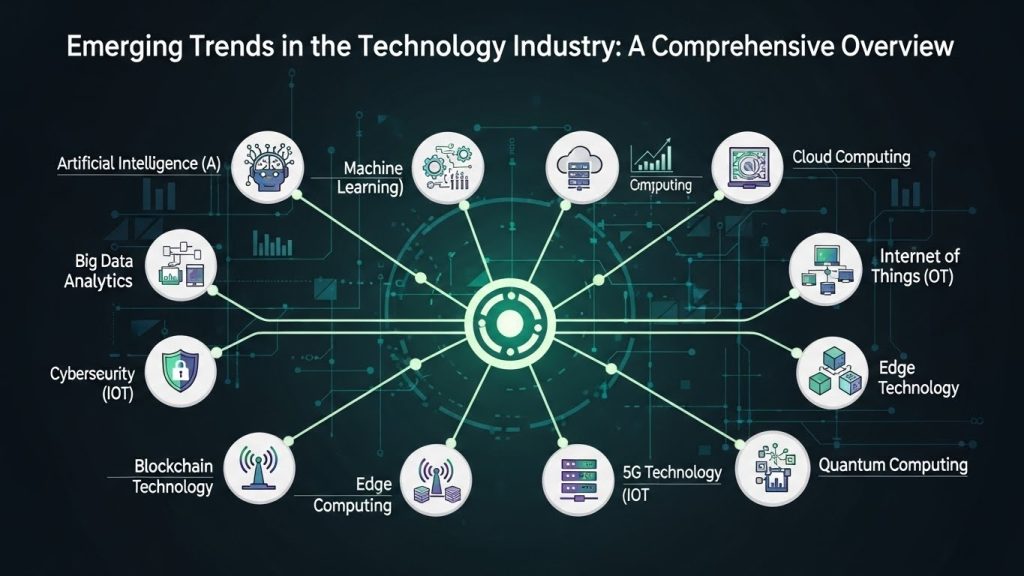
Emerging Trends in the Technology Industry: A Comprehensive Overview
The technology industry is a dynamic realm where changes happen at a breakneck pace. With the continuous advancements in various technologies, it is crucial to understand the emerging trends that are shaping the future. This blog post will explore these trends, providing insights into how they are transforming industries and everyday life.
1. Artificial Intelligence and Machine Learning
Artificial Intelligence (AI) and Machine Learning (ML) continue to be at the forefront of technological innovation. These technologies are revolutionizing industries by providing smarter solutions to complex problems. AI and ML are being integrated into everything from customer service applications to advanced data analysis tools.
One significant development in AI is the rise of generative models, such as GPT-3 and its successors. These models are capable of creating human-like text, which is being used in a variety of applications, from content creation to customer interaction. Companies are increasingly leveraging AI to improve efficiency, reduce costs, and enhance customer experiences.
For instance, in the healthcare industry, AI is used for predictive analytics, aiding in early diagnosis and personalized treatment plans. This has the potential to significantly improve patient outcomes and optimize resource allocation.
2. Internet of Things (IoT)
The Internet of Things (IoT) refers to the interconnected network of devices that communicate and exchange data with each other. IoT is playing a crucial role in transforming industries by providing real-time data and analytics. This connectivity is paving the way for smarter homes, cities, and industries.

In smart homes, IoT devices allow homeowners to control lighting, heating, and security systems remotely. Similarly, in smart cities, IoT is used to manage traffic flow, reduce energy consumption, and improve public safety. Industrial IoT (IIoT) is another significant trend where connected devices are optimizing manufacturing processes and supply chain management.
For more information on how IoT is impacting various sectors, visit IoT For All.
3. 5G Technology
5G technology is the next generation of mobile networks, offering faster speeds and more reliable connections than its predecessors. This technology is expected to be a game-changer, facilitating advancements in various areas, including augmented reality (AR), virtual reality (VR), and autonomous vehicles.
With 5G, data transfer rates are significantly increased, which is crucial for applications requiring real-time data processing. The rollout of 5G networks is expected to enhance mobile broadband services and provide new opportunities for innovation in sectors such as healthcare, where it can enable remote surgery and telemedicine.
Explore more about the impact of 5G technology on industries by visiting Qualcomm’s 5G page.
4. Blockchain Technology
Blockchain technology, initially known for powering cryptocurrencies like Bitcoin, is now finding applications beyond finance. Its decentralized nature ensures transparency, security, and efficiency in data management, making it a valuable tool across various sectors.
In supply chain management, blockchain is used to track products from production to delivery, ensuring authenticity and reducing fraud. In the healthcare sector, blockchain is used to secure patient records and facilitate data sharing among providers without compromising privacy.
To understand how blockchain is influencing different industries, check out IBM Blockchain.
5. Quantum Computing
Quantum computing is an emerging field that promises to solve complex problems beyond the reach of classical computers. While still in its early stages, quantum computing has the potential to revolutionize industries such as cryptography, material science, and drug discovery.
Companies like Google and IBM are investing heavily in quantum research, aiming to achieve quantum supremacy, where quantum computers outperform classical computers in specific tasks. The implications of quantum computing are vast, offering new possibilities in optimizing complex systems and developing new algorithms.
6. Cybersecurity Enhancements
As technology advances, so do the threats associated with it. The increasing number of cyberattacks has highlighted the need for enhanced cybersecurity measures. Innovations in this field are focused on developing more robust security protocols and leveraging AI to predict and mitigate threats before they materialize.
Zero Trust Architecture, which assumes that threats may exist inside and outside the network, is gaining traction as a new security paradigm. This approach emphasizes continuous verification of user identities and strict access controls.
7. Cloud Computing and Edge Computing
Cloud computing continues to be a cornerstone of digital transformation. By providing scalable, on-demand resources, cloud computing enables businesses to innovate faster and reduce IT costs. The trend is moving towards hybrid and multi-cloud environments, allowing organizations to leverage the best features of different cloud providers.
Edge computing, on the other hand, brings computation closer to data sources, reducing latency and improving response times. This is particularly beneficial for applications requiring real-time processing, such as autonomous vehicles and industrial automation.
For further insights into cloud and edge computing, visit Amazon Web Services.
Takeaways
The technology industry is on the cusp of transformative changes driven by these emerging trends. From AI and IoT to blockchain and quantum computing, each trend offers unique opportunities and challenges. As these technologies evolve, they will continue to redefine industries, creating new possibilities for innovation and growth.
Staying informed about these trends is crucial for businesses and individuals aiming to leverage technology for competitive advantage. As we move forward, the convergence of these technologies will likely lead to even more groundbreaking advancements, further blurring the lines between the digital and physical worlds.
8. Augmented Reality (AR) and Virtual Reality (VR)
Augmented Reality (AR) and Virtual Reality (VR) are technologies that overlay digital content on the real world (AR) or create a completely digital environment (VR). These technologies are transforming industries by providing immersive experiences that were previously unattainable.
In the retail sector, AR is being used to enhance customer experiences, allowing users to virtually try on clothes or see how furniture would look in their homes. VR, on the other hand, is revolutionizing the entertainment industry by offering immersive gaming experiences and virtual concerts.
Education and training are also benefiting from AR and VR. These technologies provide interactive learning experiences and simulations that can enhance understanding and retention. For example, medical students can perform virtual surgeries, gaining practical experience without the associated risks.
9. Robotics and Automation
Robotics and automation are playing an increasingly significant role in the modern economy. Advances in these areas are streamlining operations, increasing efficiency, and reducing costs across industries.
In manufacturing, robots are used for assembling products, handling materials, and performing quality checks. In agriculture, automation is improving crop management through precision farming techniques and autonomous machinery.
The service industry is also seeing a rise in automation, with robots handling tasks such as cleaning, delivery, and even customer service. As technology progresses, the capabilities of robots are expanding, allowing them to perform more complex tasks and work alongside humans in collaborative environments.
10. Biotechnology and Genetic Engineering
Biotechnology and genetic engineering are at the forefront of medical and agricultural advancements. These fields are leveraging technology to enhance human health, increase food production, and address environmental challenges.
In healthcare, biotechnology is leading to the development of personalized medicine, where treatments are tailored to an individual’s genetic makeup. Genetic engineering is also being used to develop new therapies for previously untreatable diseases.
In agriculture, genetic modification is helping create crops that are more resistant to pests and diseases, require less water, and yield more produce. This is crucial for addressing food security challenges posed by a growing global population.
11. Sustainable Technology and Green Tech
As environmental concerns become more pressing, the demand for sustainable technology and green tech solutions is increasing. These technologies aim to reduce environmental impact, promote energy efficiency, and support sustainable development.
Renewable energy sources, such as solar and wind power, are becoming more prevalent as technology improves and costs decrease. Energy storage technologies, like batteries, are also advancing, making renewable energy more reliable and accessible.
Sustainable technologies are not limited to energy. Innovations in waste management, water purification, and sustainable agriculture are contributing to a more sustainable future. These efforts are essential for protecting the planet and ensuring a high quality of life for future generations.
12. The Ethical and Societal Implications of Emerging Technologies
While emerging technologies offer enormous potential, they also raise ethical and societal questions that need to be addressed. Issues such as data privacy, job displacement due to automation, and the digital divide are becoming increasingly prominent.
As AI and data-driven technologies become more integrated into daily life, concerns about privacy and data security are growing. It is essential to develop robust frameworks that protect individuals’ rights while allowing for technological innovation.
Automation and AI are transforming the job market, leading to concerns about unemployment and the need for reskilling. Policymakers and businesses must work together to ensure a smooth transition and provide opportunities for those affected by technological change.
Conclusion: Embracing the Future
The trends outlined in this post illustrate the profound impact that emerging technologies are having on the world. As these technologies continue to evolve, they will create new opportunities and challenges that require careful consideration and strategic planning.
Businesses, governments, and individuals must stay informed about these trends to harness their potential and navigate the associated challenges. By embracing innovation and prioritizing ethical considerations, we can ensure that technological advancements lead to a brighter, more sustainable future for all.