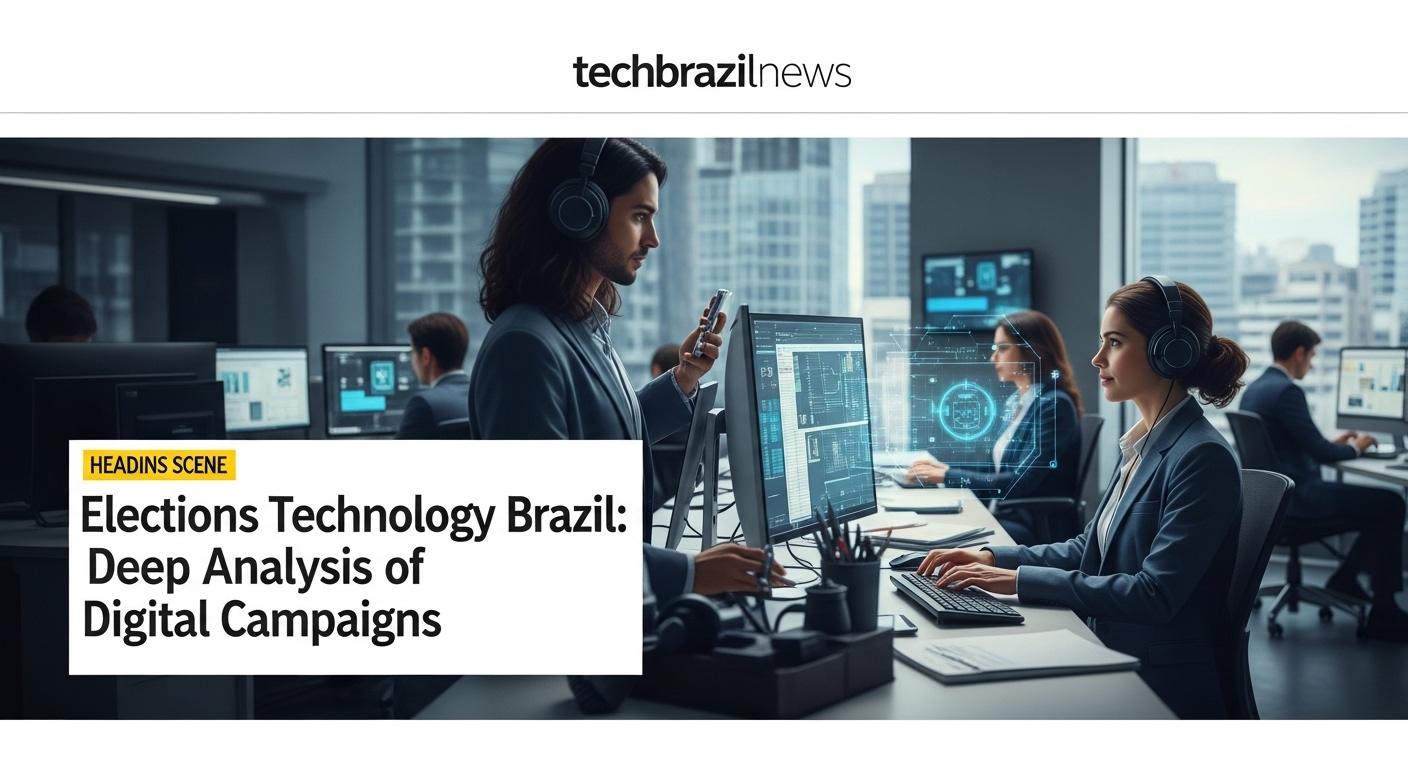
elections Technology Brazil: A thorough look at how technology shapes Brazil’s electoral process, from governance and regulatory impacts to practical steps.
techbrazilnews.comBrazil technology news and analysis.
Elections Technology Brazil: Deep Analysis of Polling Tech
Updated: April 20, 2026
In Brazil, elections Technology Brazil is more than a catchphrase—it’s reshaping how campaigns engage voters, how officials audit results, and how citizens navigate information ecosystems.
The current landscape of election technology in Brazil
Brazil relies on electronic voting as a core pillar of its electoral process, a system designed to speed results and reduce manual handling. The backbone is a public infrastructure that brings together voting machines, data centers, and the electoral court’s centralized tallies. Beyond machines, the ecosystem includes research partners from universities, independent auditors, and civil-society groups that test security, usability, and accessibility. In practice, this means technology decisions ripple across everything from campaign analytics to public information portals, with a strong emphasis on transparency and auditability.
In everyday terms, voters interact with interfaces that must be clear, multilingual, and accessible to people across urban centers and remote towns. The modern landscape also features a growing set of tools for election administration—software to manage voter rolls, track ballots, and publish results in near real time. While this concentration of tech power can improve efficiency, it also creates new fault lines: if the supply chain is compromised, if vendors operate with limited oversight, or if data governance lacks teeth, the entire process can be perceived as brittle.
Regulatory and policy drivers shaping tech deployment
Policy in Brazil now wrestles with how to align fast-paced tech innovation with robust privacy and security standards. The Lei Geral de Proteção de Dados (LGPD) governs how personal data—whether collected by campaigns, vendors, or administrators—can be used and shared. Beyond privacy, lawmakers and courts are exploring how artificial intelligence and automated tools intersect with campaigning, information verification, and results reporting. The BNamericas coverage on AI in elections highlights how regulators in Brazil and neighboring markets are tightening rules to prevent manipulation while preserving legitimate analytic capabilities.
These policy currents influence procurement, vendor oversight, and transparency obligations. For election authorities, that means more formal risk assessments, more independent testing, and tighter audit trails around software updates and security patches. For campaigns and media partners, it signals the need for clearer guidelines on data-driven targeting, content moderation, and the ethical use of automated tools. The outcome is a regulatory fabric that seeks to balance innovation and shield citizens from abuse, without stifling legitimate experimentation.
Risks, misinformation, and governance of digital tools
Technology introduces both clarity and risk into the public information environment. When voters encounter complex dashboards, algorithmic feeds, and realtime analytics, the potential for misinterpretation increases, particularly in regions with uneven digital literacy. Misinformation campaigns can exploit gaps between official results and online narratives, underscoring the need for credible, accessible official channels and rapid fact-checking mechanisms. Governance challenges multiply when supply-chain dependencies cross borders: a single software component or cloud service can influence ballot data integrity or accessibility features used by millions of voters.
In this climate, independence and transparency matter as much as technical capability. Auditors, academic researchers, and civil-society watchdogs must have timely access to source code, security assessment results, and vulnerability disclosures. Brazil’s approach to election technology benefits from cross-sector collaboration—public agencies, private vendors, and non-governmental actors sharing a common commitment to verifiable outcomes and user-centric design.
Pathways to resilient, inclusive digital elections
Looking ahead, resilience rests on a layered strategy: preserve certainty with verifiable results, while expanding accessibility and trust. That translates into robust, auditable software, transparent procurement processes, and explicit disaster-recovery plans that keep voting machines and digital interfaces functional during outages or attacks. It also means investing in digital literacy—ensuring that voters, reporters, and local officials can interpret results without misreading analytics or relying on opaque dashboards. Finally, Brazil can cultivate an ecosystem where independent researchers, civil society, and government work together to test new tools in controlled settings before broad deployment, with clear opt-in and opt-out mechanisms for communities with limited internet access.
Scenario planning suggests several concrete moves: pilot privacy-by-design procurement, publish regular security white papers, mandate independent security testing for all core election software, and maintain nonpartisan information portals that present results alongside plain-language explanations. If Brazil embraces these steps, it can strengthen credibility while embracing the benefits that modern technology offers to voters, campaigns, and administrators alike.
Actionable Takeaways
- Adopt verifiable, auditable voting technology with clear paper or cryptographic trails and independent verification.
- Strengthen data governance under LGPD with strict vendor oversight and transparent data-sharing policies.
- Scale digital literacy programs to improve interpretation of results and reduce vulnerability to misinformation.
- Implement open, auditable procurement processes and publish security assessment results for core systems.
- Establish independent election tech councils that include civil society, academia, and industry to sustain ongoing oversight.
- Invest in resilience planning—cybersecurity, disaster recovery, and accessible interfaces for diverse voter populations.